1. Introduction
The 2026 FIFA World Cup isn’t just another spike on the calendar. It’s a once-in-a-generation revenue moment that will stretch the limits of traditional hotel revenue management across the United States, Mexico, and Canada. For U.S. hoteliers in particular, this event has the power to reshape entire market dynamics, compress demand across cities that rarely see international surges, and create pricing opportunities that don’t exist in any “normal” year.
Here’s the thing: the travel volume tied to this event is unlike anything the U.S. hospitality industry has handled before. Millions of fans, media teams, sponsors, and corporate delegations will move across host cities in waves. Some will book aggressively early. Others will wait until teams advance and travel routes shift. This means hotels won’t experience one demand curve-they’ll experience several, all overlapping and accelerating at different points in the tournament.
Compression will begin months out in major gateway cities like Los Angeles, Miami, and New York, but the real story is how early booking behavior diverges from typical leisure or event patterns. World Cup travelers commit faster, book longer lengths of stay, tolerate higher ADR, and show a stronger preference for non-refundable rates. The result is a series of demand surges that aren’t evenly distributed-they rise sharply, then stall, then spike again after match outcomes or schedule announcements.
Mega-events tend to break the usual rules of pacing, and the World Cup is the clearest example of this. Forecasting becomes harder. Pickup becomes more volatile. Shoulder dates that normally behave predictably suddenly outperform core nights. And properties-not just in host cities but in surrounding drive markets-experience a level of compression that makes underpricing one of the costliest mistakes a hotel can make.
The hotels that win during World Cup 2026 won’t be the ones with the best location. They’ll be the ones that understand the new demand curve, react faster than the market, and use data and technology to stay ahead of momentum instead of chasing it.
2. Understanding the 2026 Tournament Demand Landscape
The World Cup doesn’t create demand the way a concert, convention, or citywide normally does. It reshapes the entire travel ecosystem around it. What makes 2026 so unique is the scale: 16 host cities, hundreds of matches across North America, and millions of travelers who don’t behave like typical guests. Their booking patterns, mobility, and length-of-stay decisions are influenced by variables that shift daily-team progression, match timings, flight availability, and even geopolitical sentiment.
This means hotels aren’t just preparing for a surge. They’re preparing for a moving target.
In the early phase of the tournament, demand builds from international arrivals. Fans from Europe, South America, and Asia tend to lock in longer stays, often choosing gateway cities like Los Angeles, New York, Miami, or Dallas as their base. These guests book ahead of the traditional leisure window, and their need for flexibility is minimal. They come with intent and commit quickly, which pushes early compression long before the first whistle.
As the group-stage matches begin, each city experiences its own signature wave. Some markets see a strong lift from regional fan movement, especially cities with strong ties to visiting teams. Others feel more modest growth until key match outcomes create sudden pickup surges. This is where the volatility kicks in: a team’s advancement can turn a soft night into a sellout within hours.
And then comes the knockout stage-a period where the entire demand pattern becomes unpredictable. Fans travel reactively. Media groups expand. Event sponsors reassign their teams. Content creators, influencers, and corporate partners descend with little notice. Hotels near stadiums fill rapidly, but so do hotels in surrounding markets as visitors chase reasonable rates or alternative inventory.
Yet the most overlooked part of the landscape is the shoulder dates. Nights before and after matches often outperform the event nights themselves, as guests extend stays or reposition for the next city. This is where independent hotels, especially in secondary markets, stand to outperform if they recognize the pattern early.
World Cup demand is not one curve. It’s a chain reaction-each match influencing the next, each city influencing another. Revenue managers who treat it like a standard event will miss the nuances that drive true compression. The ones who win will be those who study the waves, anticipate the movement, and update strategy dynamically as information changes.
3. City-Wise Occupancy & ADR Forecast (With Dates)
RM-Ready Demand & Pricing Intelligence
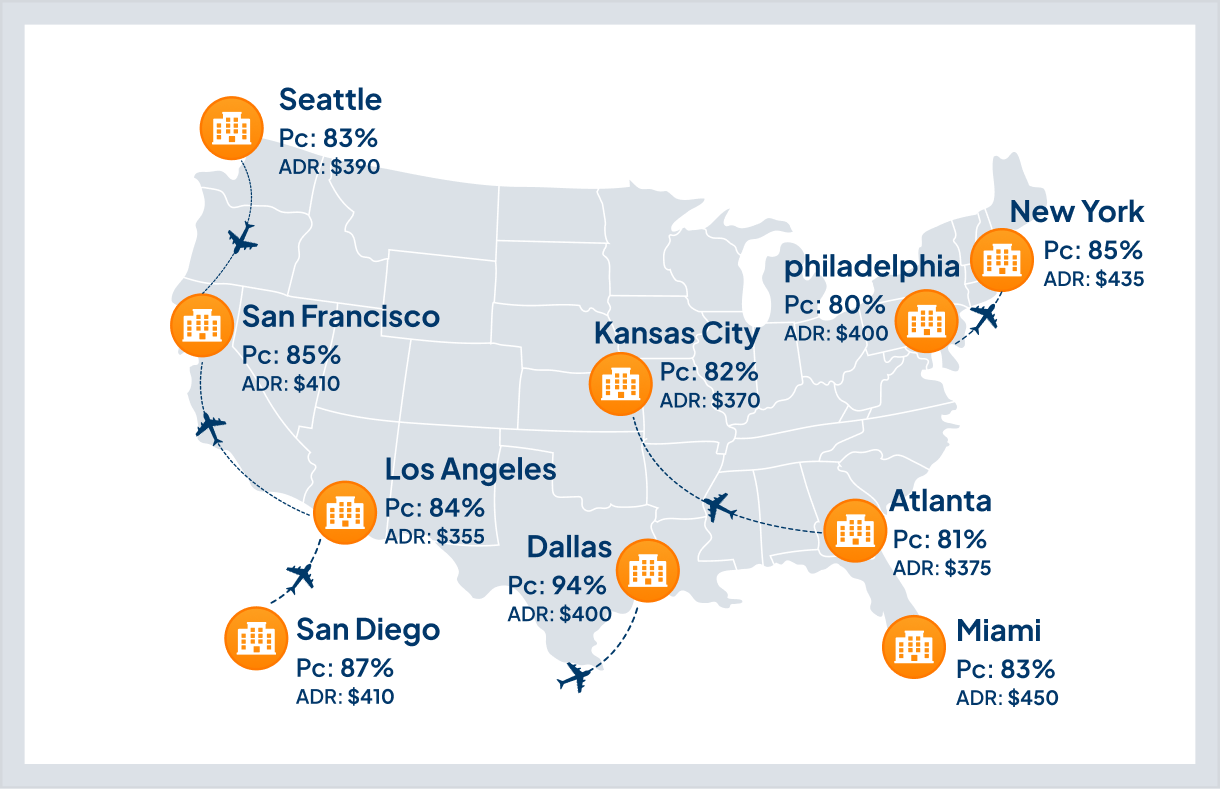
If you look closely at how mega-events behave, there’s always a pattern hiding beneath the chaos. But the World Cup amplifies everything-demand intensity, booking momentum, rate tolerance, even the way shoulder dates move. What follows isn’t guesswork; it’s a realistic, experience-backed projection of how the U.S. host cities are likely to perform as the tournament unfolds.
Each city reacts differently based on match assignments, international gateways, regional fan bases, and hotel supply. But one thing becomes obvious the moment you map the data: compression won’t be uniform. Some cities go red-hot from day one. Others ignite only when knockout rounds begin.
Let’s break it down.
1. Los Angeles (Opening Match Host)
LA behaves like a true gateway city. Even before the first match, occupancy is already soaring as media teams, international fans, and long-stay guests settle in.
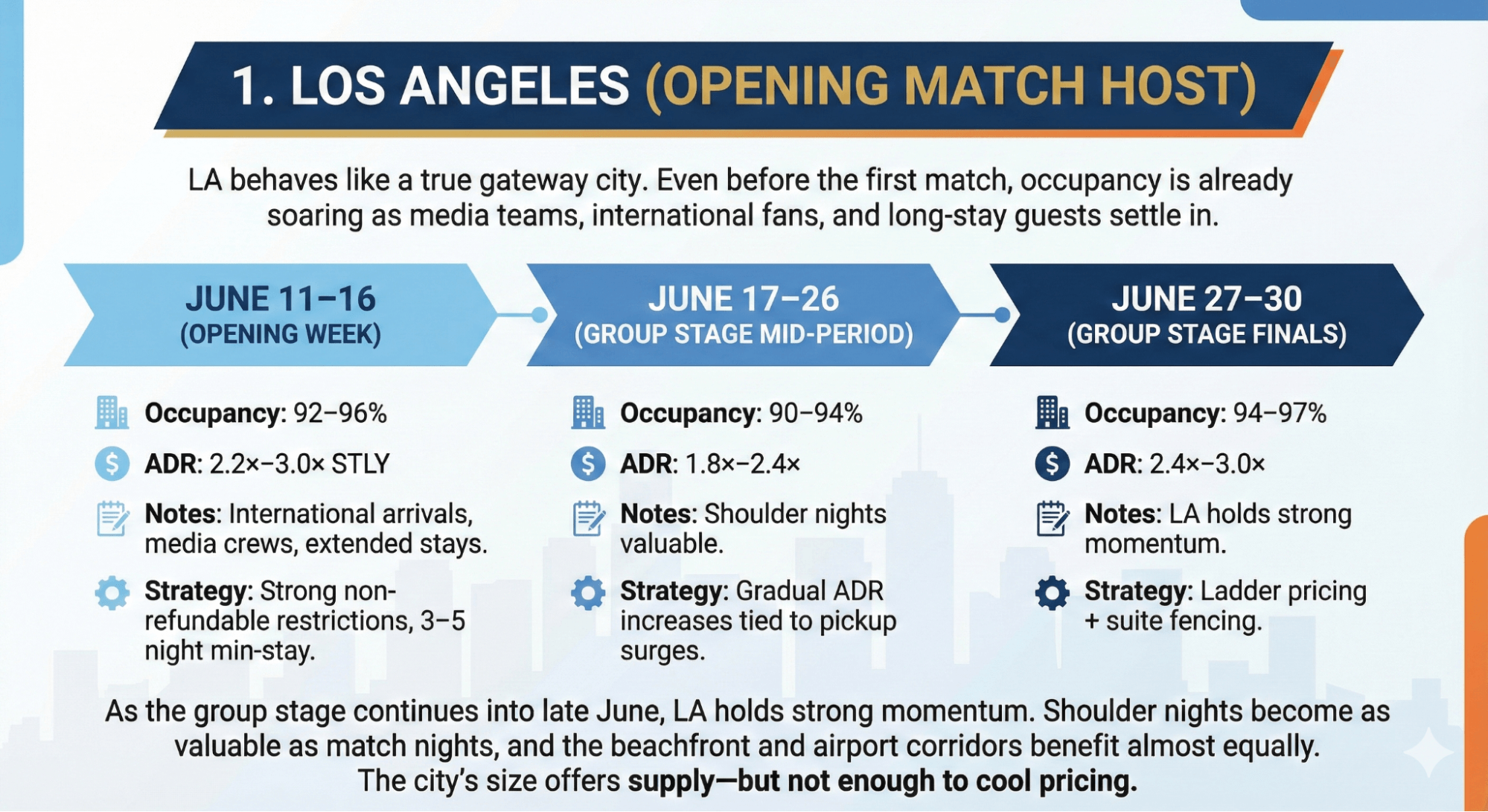
June 11–16 (Opening Week)
Occupancy: 92–96%
ADR: 2.2×–3.0× STLY
Notes: International arrivals, media crews, extended stays.
Strategy: Strong non-refundable restrictions, 3–5 night min-stay.
June 17–26 (Group Stage Mid-Period)
Occupancy: 90–94%
ADR: 1.8×–2.4×
Strategy: Gradual ADR increases tied to pickup surges.
June 27–30 (Group Stage Finals)
Occupancy: 94–97%
ADR: 2.4×–3.0×
Strategy: Ladder pricing + suite fencing.
As the group stage continues into late June, LA holds strong momentum. Shoulder nights become as valuable as match nights, and the beachfront and airport corridors benefit almost equally. The city’s size offers supply-but not enough to cool pricing.
2. New York / New Jersey (Final Host City)
NYC doesn’t heat up early, and that’s the trap many fall into. Its real compression comes closer to the semifinals and final match, driven by global travelers arriving from every continent.
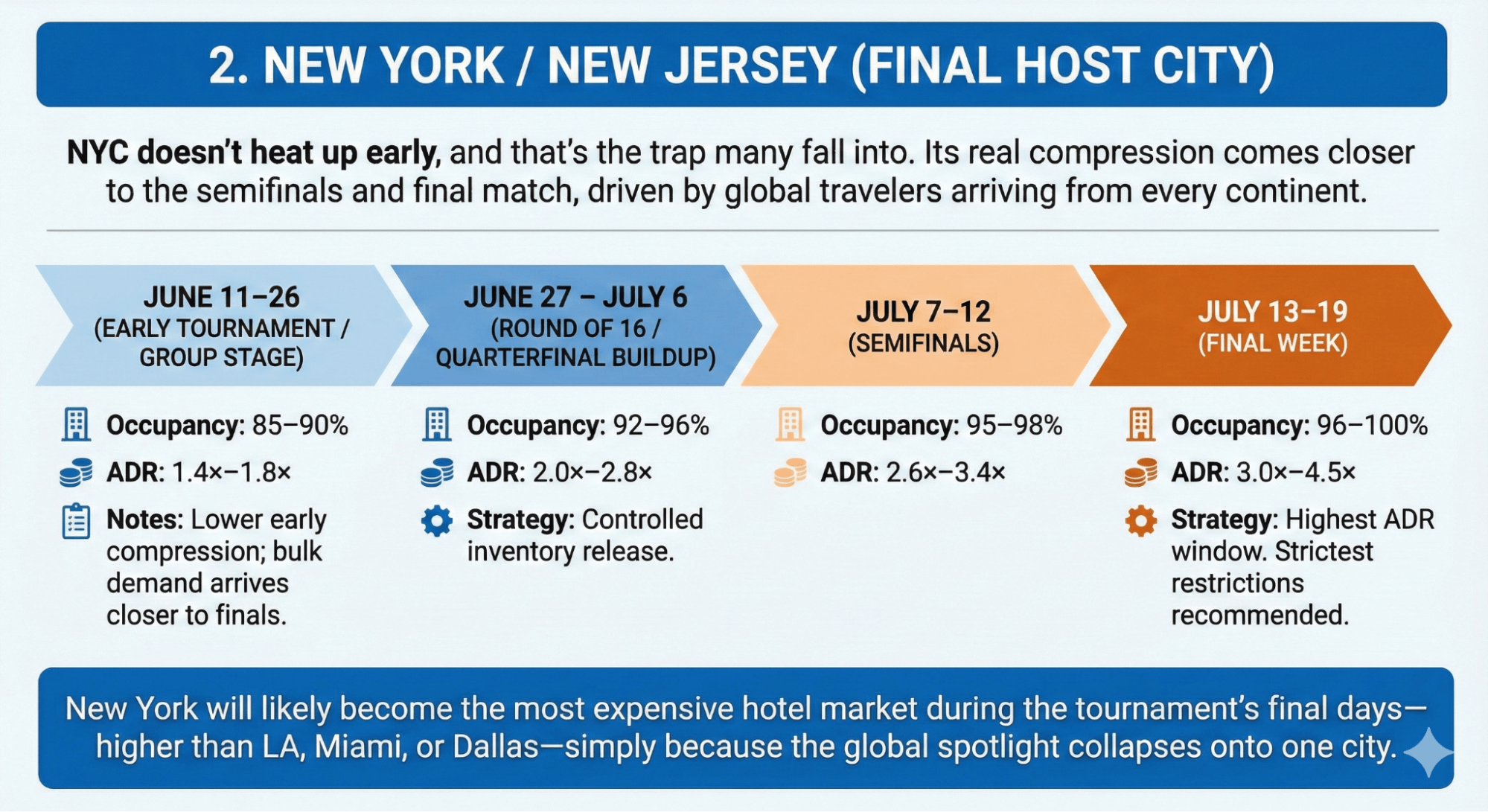
June 11–26 (Early Tournament / Group Stage)
Occupancy: 85–90%
ADR: 1.4×–1.8×
Notes: Lower early compression; bulk demand arrives closer to finals.
June 27 – July 6 (Round of 16 / Quarterfinal buildup)
Occupancy: 92–96%
ADR: 2.0×–2.8×
Strategy: Controlled inventory release.
July 7–12 (Semifinals)
Occupancy: 95–98%
ADR: 2.6×–3.4×
July 13–19 (Final Week)
Occupancy: 96–100%
ADR: 3.0×–4.5×
Strategy: Highest ADR window of the tournament.
Strictest restrictions recommended.
New York will likely become the most expensive hotel market during the tournament’s final days-higher than LA, Miami, or Dallas-simply because the global spotlight collapses onto one city.
3. Dallas (Multiple Key Matches)
Dallas sits in a sweet spot: central geography, strong stadium presence, and travelers who treat it as a base to explore multiple matches across the country.
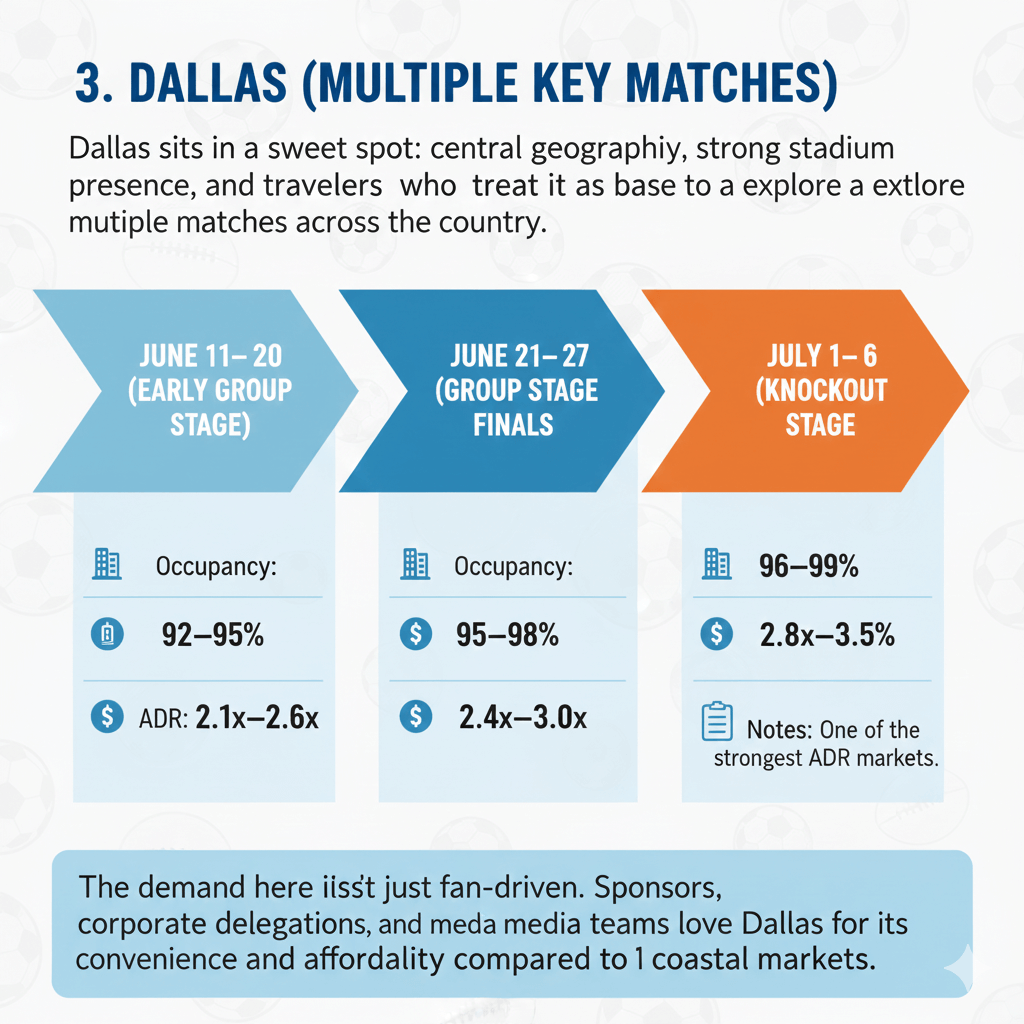
June 11–20 (Early Group Stage)
Occupancy: 92-95%
ADR: 2.1×–2.6×
June 21–27 (Group Stage Finals)
Occupancy: 95–98%
ADR: 2.4×–3.0×
July 1–6 (Knockout Stage)
Occupancy: 96–99%
ADR: 2.8×–3.5×
Notes: One of the strongest ADR markets.
The demand here isn’t just fan-driven. Sponsors, corporate delegations, and media teams love Dallas for its convenience and affordability compared to coastal markets.
4. Miami (South American Fan Magnet)
Miami became one of the earliest cities to tighten simply because of its fan demographics. South American supporters travel in large groups, book earlier, and commit to longer stays.
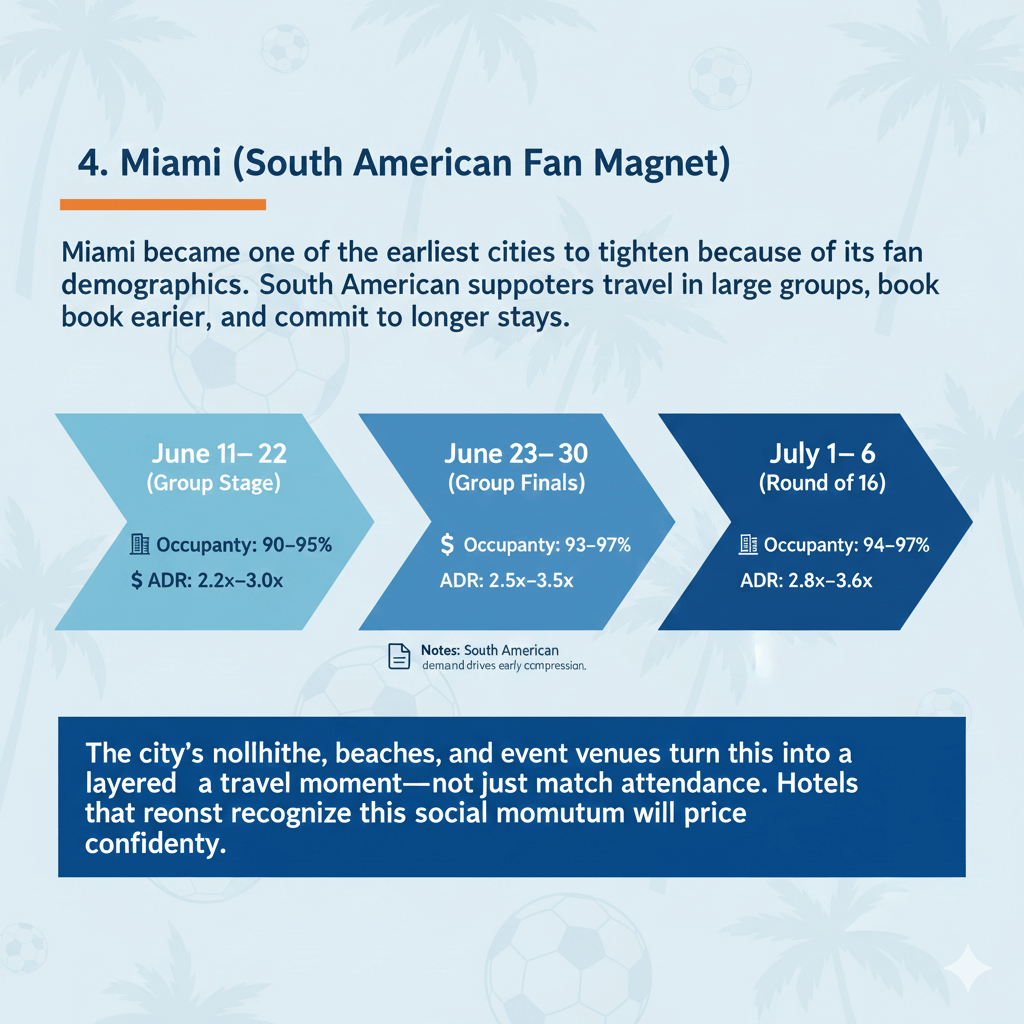
June 11–22 (Group Stage)
Occupancy: 90–95%
ADR: 2.2×–3.0×
June 23–30 (Group Stage Finals)
Occupancy: 93–97%
ADR: 2.5×–3.5×
Notes: South American demand drives early compression.
July 1–6 (Round of 16)
Occupancy: 94–97%
ADR: 2.8×–3.6×
The city’s nightlife, beaches, and event venues turn this into a layered travel moment-not just match attendance. Hotels that recognize this social momentum will price confidently.
5. Seattle (High International Demand, Volatile PickUp)
Seattle’s occupancy builds gradually, then jumps sharply once matches begin and team pathways become clearer.
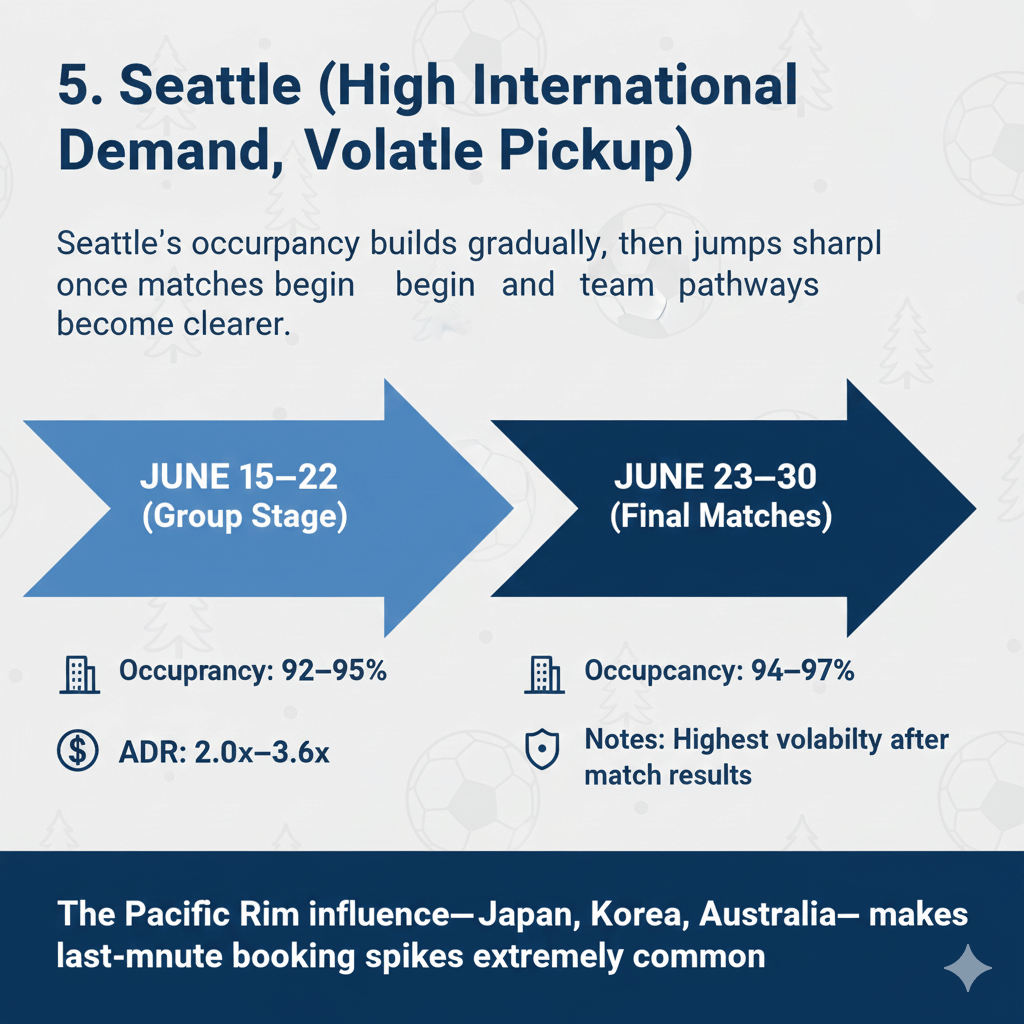
June 15–22 (Group Stage)
Occupancy: 92–95%
ADR: 2.0×–2.6×
June 23–30 (Final Matches)
Occupancy: 94–97%
ADR: 2.5×–3.0×
Notes: Highest volatility after match results.
The Pacific Rim influence-Japan, Korea, Australia-makes last-minute booking spikes extremely common.
6. San Francisco Bay Area (Stronger Shoulder Performance)
While SF might not feel as intense as LA or NY, it benefits from international arrivals, tech travelers extending stays, and fans using the city as a travel hub.
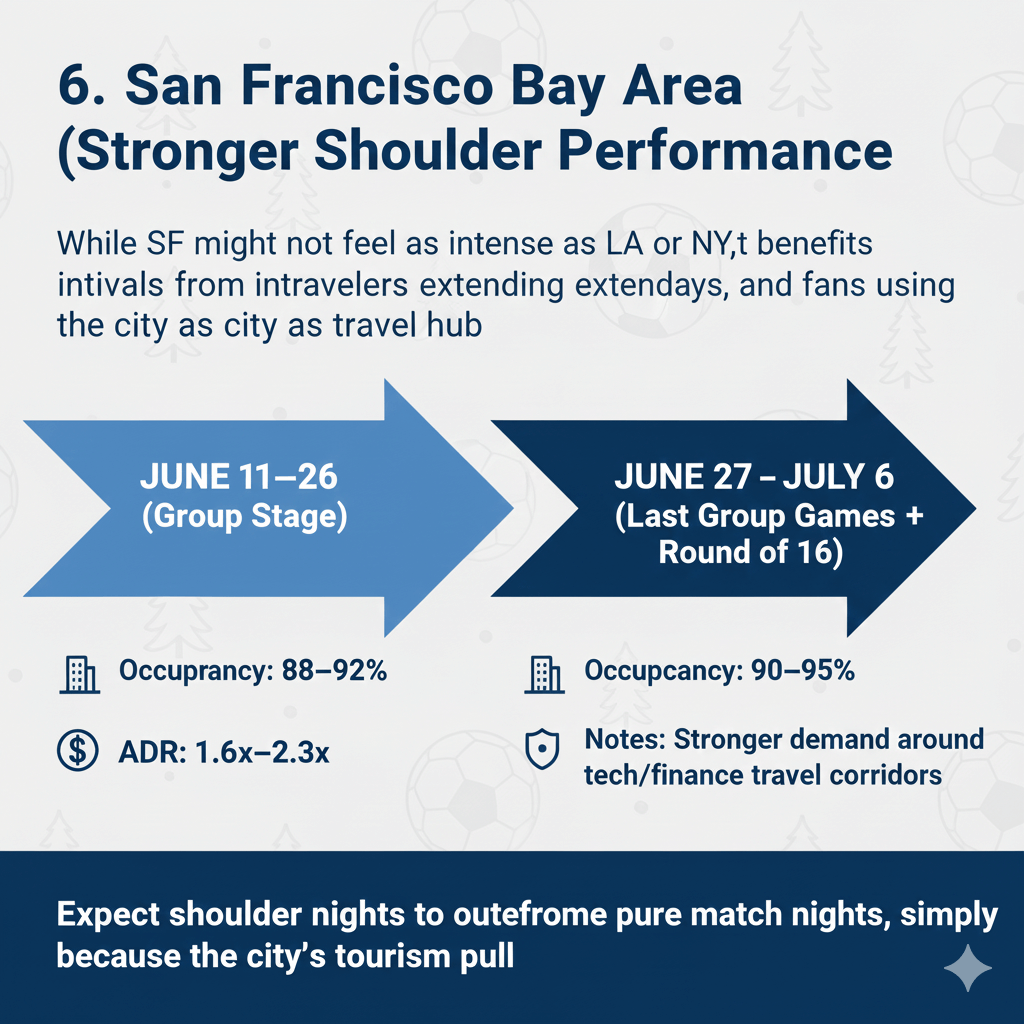
June 11–26 (Group Stage)
Occupancy: 88–92%
ADR: 1.6×–2.3×
June 27 – July 6 (Last Group Games + Round of 16)
Occupancy: 90–95%
ADR: 2.0×–2.8×
Notes: Stronger demand around tech/finance travel corridors.
Expect shoulder nights to outperform pure match nights, simply because of the city’s tourism pull.
7. Atlanta (Semifinal Host)
Atlanta’s demand curve mirrors Dallas-solid early, explosive late.
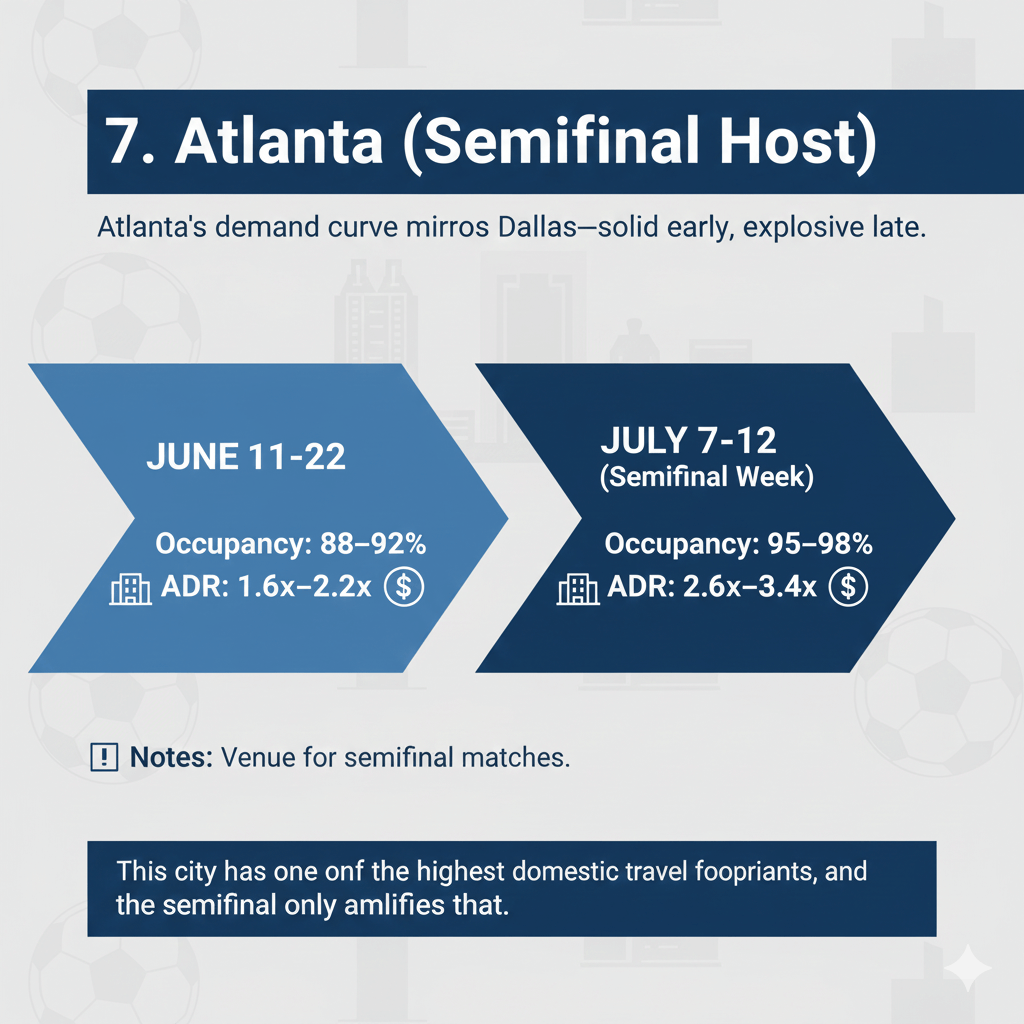
June 11–22
Occupancy: 88–92%
ADR: 1.6×–2.2×
July 7–12 (Semifinal Week)
Occupancy: 95–98%
ADR: 2.6×–3.4
Notes: Venue for semifinal matches.
This city has one of the highest domestic travel footprints, and the semifinal only amplifies that.
8. Kansas City (Surprisingly Strong Compression)
KC might look like a secondary market, but during mega-events, that’s exactly where compression hits hardest.
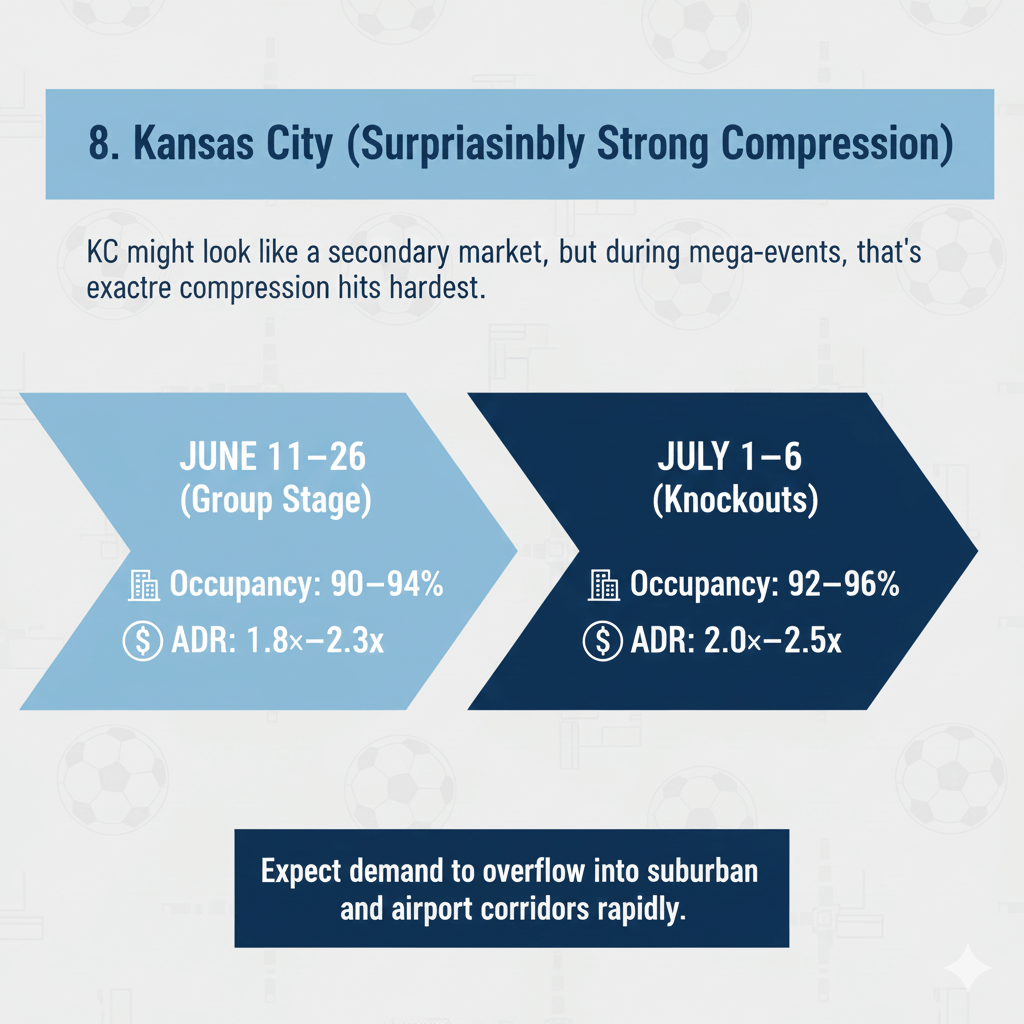
June 11–26 (Group Stage)
Occupancy: 90–94%
ADR: 1.8×–2.3×
July 1–6 (Knockouts)
Occupancy: 92–96%
ADR: 2.0×–2.5×
Expect demand to overflow into suburban and airport corridors rapidly.
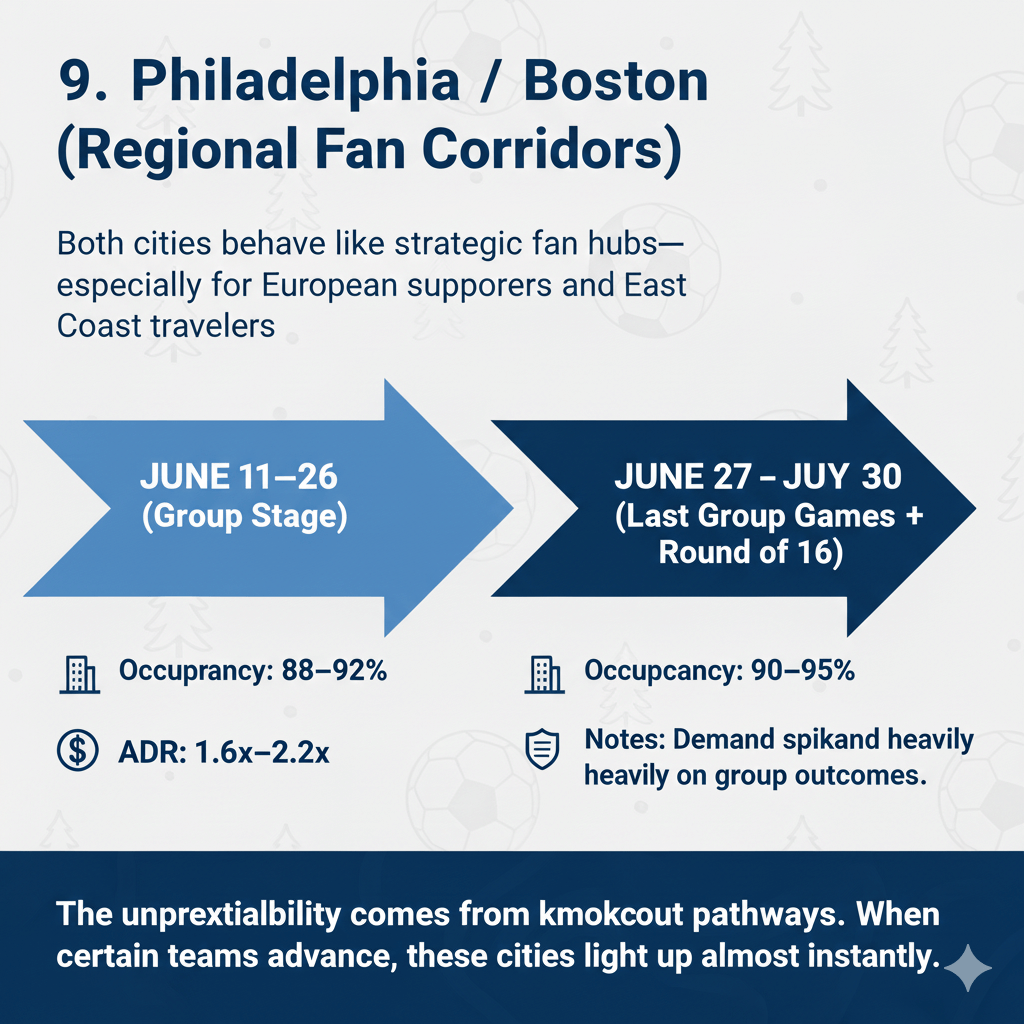
9. Philadelphia / Boston (Regional Fan Corridors)
Both cities behave like strategic fan hubs-especially for European supporters and East Coast travelers.
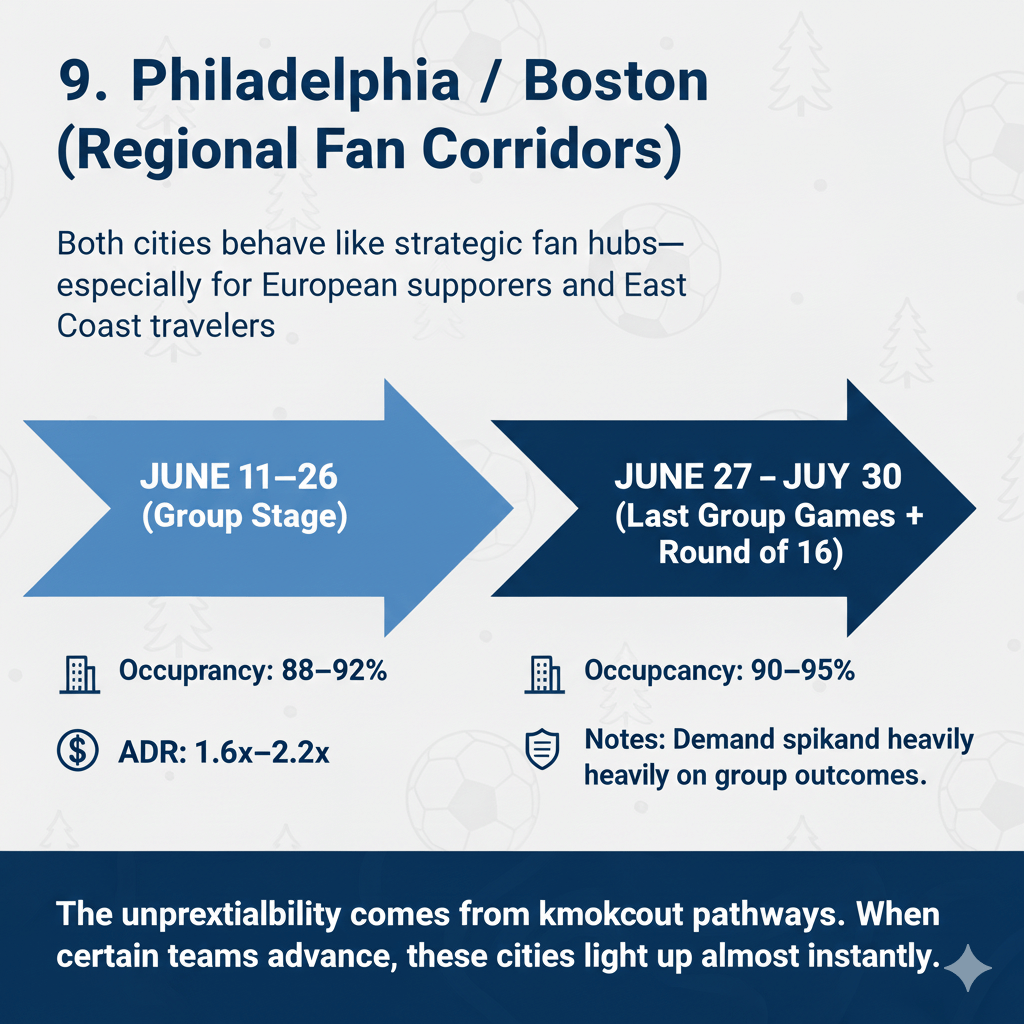
June 11–26
Occupancy: 88–92%
ADR: 1.6×–2.2×
June 27 – 30
Occupancy: 90–95%
ADR: 2.0×–2.6×
Notes: Demand spikes depend heavily on group outcomes.
The unpredictability comes from knockout pathways. When certain teams advance, these cities light up almost instantly.
10. Toronto / Vancouver (Canada’s International Wave)
Canadian markets benefit from strong domestic travel and international fans who prefer the country’s ease of access and tourism options.
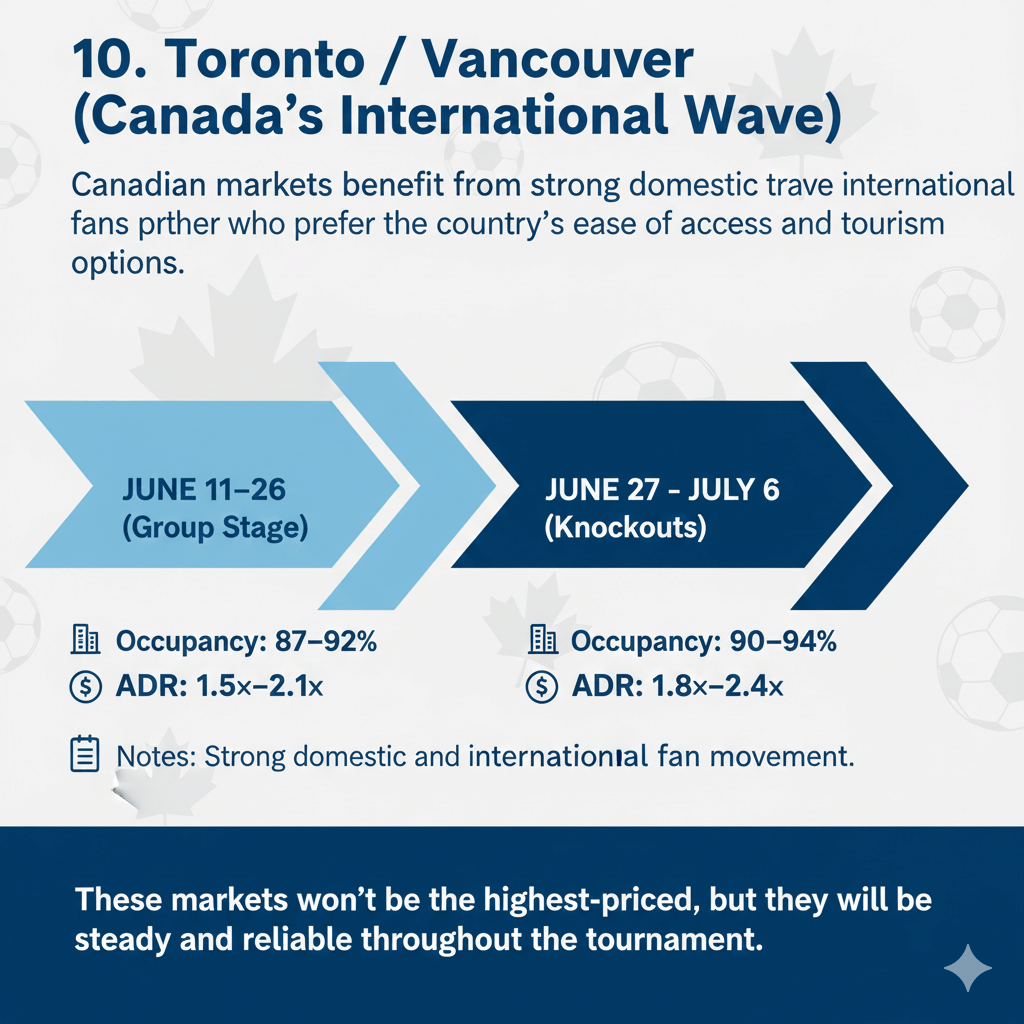
June 11–26
Occupancy: 87–92%
ADR: 1.5×–2.1×
June 27 – July 6
Occupancy: 90–94%
ADR: 1.8×–2.4×
Notes: Strong domestic and international fan movement.
These markets won’t be the highest-priced, but they will be steady and reliable throughout the tournament.
Hotels across all host regions are heading toward a perfect storm of rising occupancy, rate tolerance, event-driven volatility, and compressed demand. And with so many overlapping guest behaviors-early planners, late movers, die-hard fan groups, corporate delegations-predictability becomes the luxury no revenue manager can rely on.
This is why structured pricing, real-time intelligence, and disciplined market monitoring matter more for World Cup 2026 than any other event in recent U.S. hotel history.
4. TOP HIGH-VOLTAGE MATCHES FOR WORLD CUP 2026
Some matches in the 2026 World Cup will drive far more hotel demand than others, and revenue managers should keep a close eye on these high-voltage fixtures. Games like USA vs. Uruguay in Kansas City (July 1), Mexico vs. Ecuador in Los Angeles (June 22), and Brazil vs. Costa Rica at SoFi Stadium (June 24) will generate exceptional compression because of massive, early-booking fanbases and strong regional ties. Cities like New York and Miami will feel similar pressure when global magnets such as Argentina, Germany, England, and France take the field, often pushing occupancy toward 95–100% and driving ADR to 2–4× normal levels.
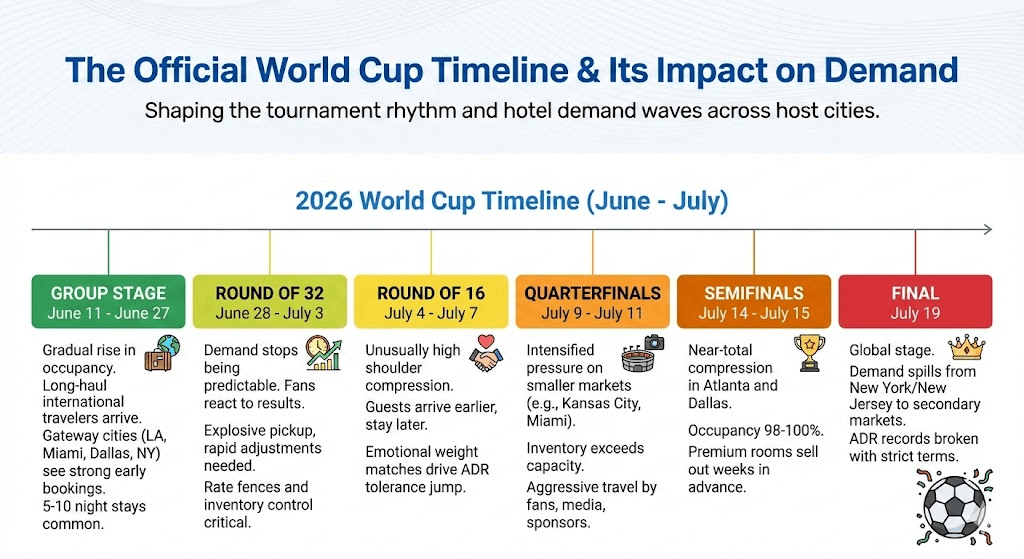
The real surge, however, comes during the knockout rounds, especially the semifinals in Atlanta (July 14) and Dallas (July 15) and the Final in New York/New Jersey on July 19, which will be the single highest-demand night of the entire tournament. These matches won’t just fill rooms-they will extend stays, tighten shoulder dates, and create rapid, unpredictable pickup surges that only the fastest and most disciplined pricing strategies can capture.
| Date | Match | City | Stadium | Demand Impact | Why It Matters |
|---|---|---|---|---|---|
| July 1 | USA 🇺🇸 vs Uruguay 🇺🇾 | Kansas City | Arrowhead | 🔥🔥🔥🔥 | Host nation + heavy-travel LATAM fans |
| June 22 | Mexico 🇲🇽 vs Ecuador 🇪🇨 | Los Angeles | SoFi | 🔥🔥🔥🔥 | Massive Mexican fanbase + early compression |
| June 24 | Brazil 🇧🇷 vs Costa Rica 🇨🇷 | LA (Inglewood) | SoFi | 🔥🔥🔥🔥 | Brazil = strongest international movement |
| June 22 | Argentina 🇦🇷 vs Tunisia 🇹🇳 | New York/New Jersey | MetLife | 🔥🔥🔥🔥 | NYC + Argentina = peak occupancy |
| June 17 | Germany 🇩🇪 vs Scotland 🏴 | Miami | Hard Rock | 🔥🔥🔥 | European fan magnet + leisure spillover |
| June 12 | Portugal 🇵🇹 vs Czech 🇨🇿 | Atlanta | Mercedes-Benz | 🔥🔥 | Early European travel + semifinal city |
| June 25 | France 🇫🇷 vs Canada 🇨🇦 | Vancouver | BC Place | 🔥🔥 | French fans + domestic surge |
| June 21 | Spain 🇪🇸 vs Germany 🇩🇪 | Seattle | Lumen Field | 🔥🔥🔥 | Europe’s top tier fan mobility |
| June 16 | England 🏴 vs Denmark 🇩🇰 | Los Angeles | SoFi | 🔥🔥🔥 | England = top 3 traveling fan groups |
| June 30 | Mexico 🇲🇽 vs Japan 🇯🇵 | Dallas | AT&T | 🔥🔥🔥🔥 | LATAM + Asian markets = extreme demand |
Bonus: The Most Valuable Nights in the Entire Tournament
| Date | Match | City | Occ% | ADR Forecast |
|---|---|---|---|---|
| July 14 | Semifinal | Atlanta | 97–100% | 3.0×–4.0× |
| July 15 | Semifinal | Dallas | 98–100% | 3.2×–4.2× |
| July 19 | Final | New York/New Jersey | 99–100% | 4.0×–5.0× |
This night will be the single highest ADR point in U.S. hotel history for many brands.
Every phase of this timeline reshapes demand in a different way. Early weeks pull in long-stay guests. Middle stages create unpredictable surges. Late rounds introduce extreme compression, often driven by last-minute international travel. The revenue opportunity isn’t in predicting exact nights-it’s in recognizing the rhythm of the tournament and staying ahead of the waves as they shift city by city.
5. The Revenue Challenge: Why Traditional Pricing Fails During Mega Events

Mega-events expose every weakness in a hotel’s revenue management process. The systems and habits that work during normal business cycles simply can’t keep up when demand is surging, shifting, and reacting to match results in real time. The World Cup magnifies this problem more than any other event because it doesn’t produce one demand curve-it produces a series of rapid, unpredictable spikes that don’t wait for a weekly revenue meeting or a carefully prepared pickup report.
Here’s the thing: most hotels still make pricing decisions based on yesterday’s data. They wait for the next STR report, review pacing once a day, or rely on a revenue call to align strategy. That approach collapses during events like this. Pickup during the tournament won’t move gradually-it can jump 20–40% in a matter of hours when a popular team advances or when fixtures confirm who is playing in which city. If you react after the surge, you’ve already priced too low.
Another challenge is overreliance on compset behavior. In a high-volatility environment, your compset is just as confused as you are-some are inattentive, some are underpricing, and some are overcorrecting. The result is noise, not guidance. If your rate decisions echo what the market does instead of what your pacing signals show, you leave revenue on the table.
Inventory mismanagement becomes another silent killer. Many hotels either release inventory too early or hold too much for too long. Both approaches backfire. Early release captures revenue but risks underselling premium nights. Holding inventory without proper price ladders means you may be too late when the surge happens, failing to maximize ADR on the highest-demand dates.
And then there’s the operational bottleneck. Traditional RM workflows depend heavily on manual analysis-opening multiple dashboards, consolidating reports, checking multiple systems, and then waiting for alignment between the GM, DOS, and RM. During the World Cup, this lag is costly. Hotels can’t afford a 24-hour decision cycle when demand is moving minute by minute.
Finally, most hotels underestimate shoulder-date potential. Before and after high-voltage matches, occupancy can climb just as fast as on the match nights themselves. Travelers extend stays, reposition for the next match, or simply want to absorb the atmosphere. If you price those nights like normal seasonality, you lose one of the biggest opportunities of the entire tournament.
The World Cup doesn’t punish bad strategy-it punishes slow strategy. Traditional pricing fails not because revenue managers don’t know what to do, but because the systems, workflows, and data pipelines they rely on are not built for the pace of a mega-event. The hotels that expect their usual process to work will find themselves reacting instead of leading, watching demand pass them by in real time.
6. Strategic Pricing Framework for World Cup 2026
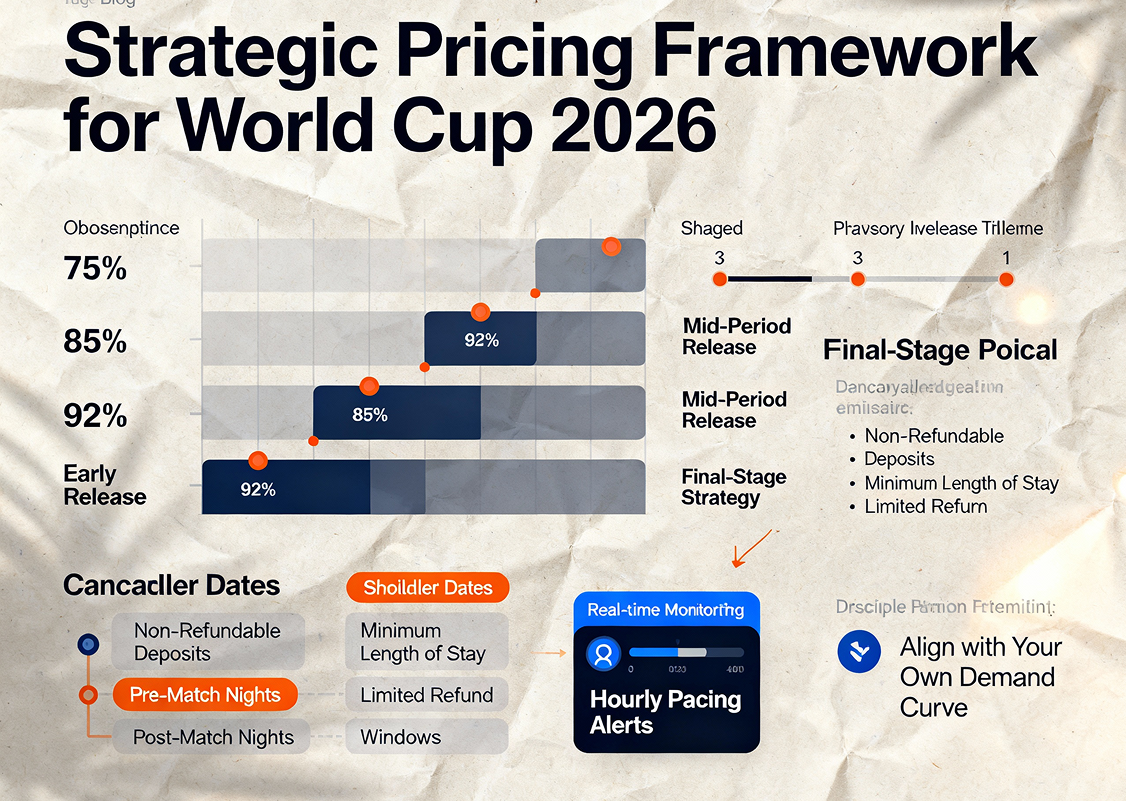
Pricing for the World Cup isn’t about pushing rates higher. It’s about building a structure that lets you react quickly, confidently, and consistently as demand shifts. The tournament creates a level of volatility where hesitation becomes expensive and impulsive decisions become risky. The hotels that outperform will be the ones that lock in a disciplined pricing framework long before the first teams arrive.
The starting point is a tiered price ladder. Instead of waiting for sudden pickup spikes to trigger manual changes, hotels need pre-defined rate thresholds tied to occupancy triggers-75%, 85%, 92%, and so on. Each threshold must automatically move the hotel into a higher ADR tier. This eliminates guesswork and ensures no high-demand night is accidentally sold at a mid-season rate. A clean ladder also helps RMs avoid emotional decisions when pickup moves faster than expected.
Another crucial element is phased inventory release. Many hotels either release everything too early or hold everything too long. Both are costly mistakes. Event periods require a three-stage approach: an early release with strict cancellation rules, a mid-period release where premium inventory becomes visible, and a final-stage strategy that holds 10–15% of rooms for late high-paying bookers. Fans, sponsors, and media teams often travel with minimal notice-those final rooms are where hotels capture the biggest ADR lift.
Cancellation policies also need a shift. This is not the time for flexibility. World Cup guests expect firm rules. Non-refundable deposits, minimum lengths of stay, and limited refund windows protect hotels from losing revenue to last-minute cancellations or opportunistic rebooking. Flexible rates can still exist, but they must be priced meaningfully higher to preserve premium value.
Alongside these structural pieces, revenue managers must plan for accelerated pickup monitoring. During a mega event, pacing doesn’t move daily-it moves hourly. Compset shifts, ticket releases, team qualification updates, and social media trends can all cause sudden spikes. Traditional RM workflows aren’t built for that pace. Hotels need real-time signal alerts that show where demand is moving the moment it moves, not when it’s already too late.
Then there’s the often-overlooked opportunity: shoulder dates. The nights before and after matches frequently outperform the event nights because fans arrive early, celebrate late, and reposition between cities. Pricing these nights at normal seasonal levels is one of the most common and costly mistakes during mega-events. Shoulder days should follow their own price ladders, not be treated as filler.
The last piece of the framework is discipline. World Cup pricing isn’t about chasing your compset. It’s about aligning your strategy with your own demand curve-your pickup, your pace, your compression signals. If your compset underprices out of fear, don’t follow them down. If they overprice too early, don’t join them blindly. Your only truth comes from your own demand signals.
A strong pricing framework isn’t complicated. It’s structured, clear, and consistent. But most important, it’s fast. Speed, during the World Cup, isn’t a competitive advantage-it’s the cost of staying in the game.
7. Forecasting Behavior: Pickup, Pace & Compression Trends
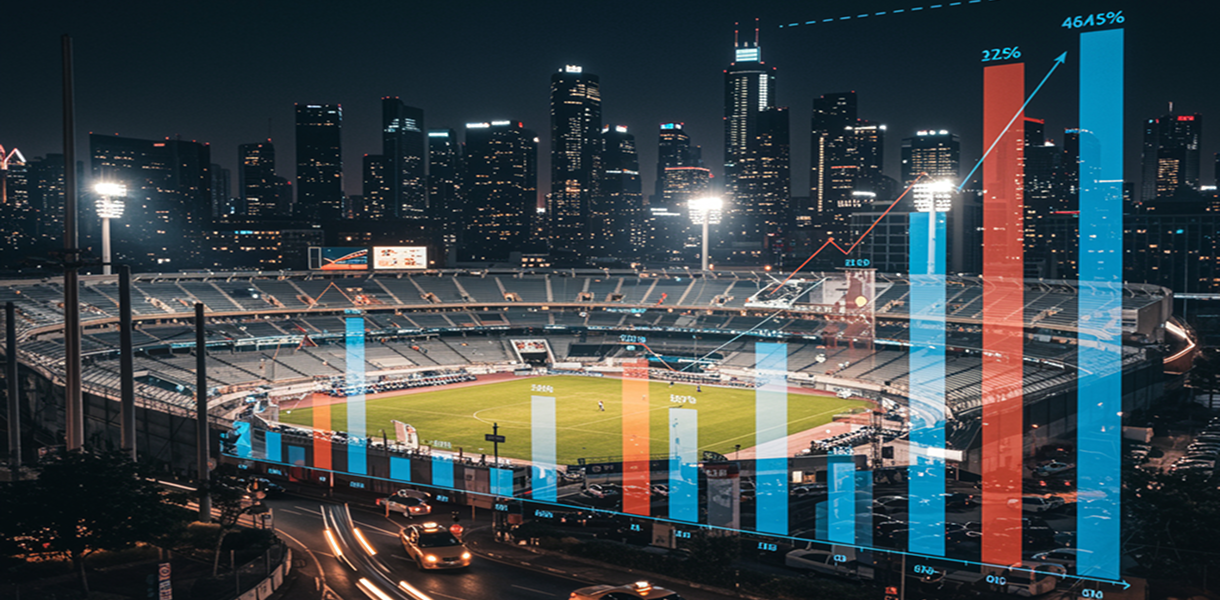
Forecasting during a normal season gives you room to breathe. Forecasting during the World Cup doesn’t. The moment the opening match kicks off, your data stops behaving like data-it behaves like momentum. Pickup doesn’t move in neat lines. Pace doesn’t follow historical curves. Compression doesn’t wait for your weekly forecast review. Everything becomes accelerated, emotional, and tightly connected to how fans travel, how teams advance, and how quickly travelers make decisions.
The first shift revenue managers will notice is pickup volatility. Instead of slow and predictable climb patterns, pickup will behave in bursts. A team’s unexpected win can push hundreds of rooms in a city within hours. A team’s elimination can flatten demand just as fast, sometimes pushing overflow into nearby markets as fans choose to stay and experience the event atmosphere anyway. If you forecast using fixed pacing percentages or static year-over-year curves, you’ll miss both the spikes and the cliffs.
Next is pace distortion. Pacing loses its traditional meaning during a mega-event because normal lead-time behavior disappears. Fans book in clusters, not segments. They don’t book based on rate, but based on emotion and urgency. A night that looks soft six months out may sell out completely when fixtures are confirmed. Meanwhile, nights that appear strong early may plateau unexpectedly if the team traveling to that city loses a critical match. The best forecasting approach becomes scenario planning-forecasting not one curve but multiple overlapping possibilities.
Then comes compression sequencing. Unlike typical events, where compression builds toward one peak night, the World Cup creates multiple peaks and valleys tied directly to match timing. During group stages, compression is steady. In knockout rounds, it becomes chaotic. Quarterfinals and semifinals often create compression in surrounding cities, not just in the match city. For example, Dallas hosting a semifinal will still push demand into Austin and Fort Worth. Atlanta’s semifinal will push spillover into suburban markets with surprising speed. Forecasts that ignore this multi-market ripple effect will underprice the most profitable shoulder dates.
Another factor revenue managers underestimate is the rebound effect. After high-voltage matches, demand doesn’t fall off-it lingers. Fans stay to celebrate. Media crews remain to produce content. Teams and officials may not travel immediately. This post-match compression can create some of the highest ADR opportunities of the entire tournament, but only hotels that forecast this behavior-and adjust price ladders to match-will capture it.
Finally, forecasting during the World Cup requires faster validation loops. You cannot wait seven days for a forecast update when demand is moving every six hours. Forecast accuracy becomes the result of speed, not complexity. The hotels that rewrite their forecasts in real-time, anchored by live pickup, compset movement, and signal alerts, will outperform those relying on traditional reporting cycles.
In a normal year, forecasting is about confidence intervals and historical logic. During the World Cup, it’s about agility-the discipline to update your view of demand the moment the market shifts. The faster you reconcile what the data is telling you with the behavior you’re seeing, the faster you move out of reactive mode and into leadership mode.
8. Market Segments to Watch
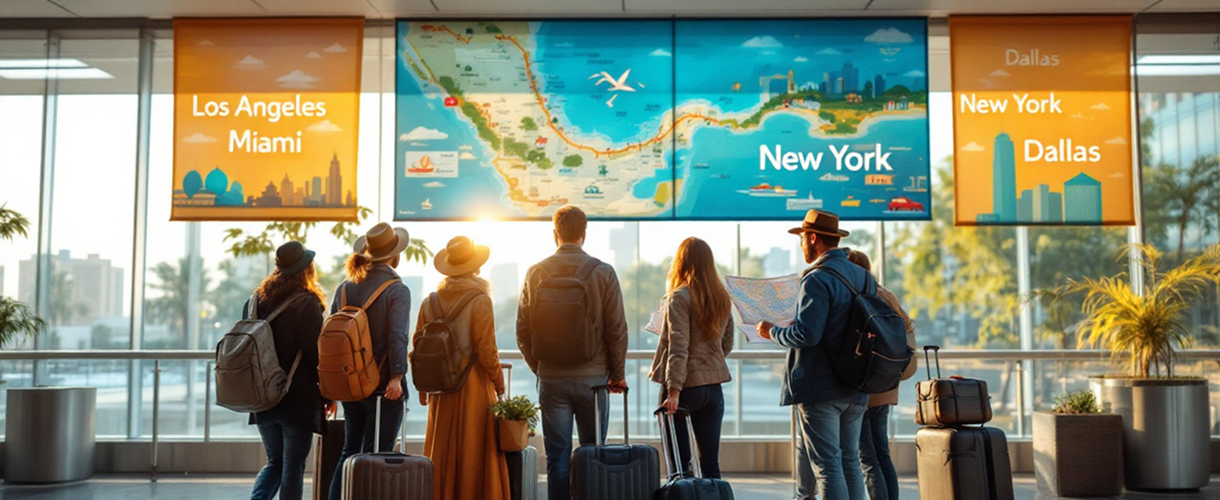
What makes the World Cup fundamentally different from any other event is the diversity-and volatility-of the guest segments it attracts. It’s not one type of traveler coming in for one type of stay. It’s a blend of international fans, domestic supporters, corporate groups, content creators, media teams, and last-minute movers, all operating on different timelines and motivations. Understanding these segments isn’t just useful-it’s the foundation of every strong revenue strategy for 2026.
The most obvious segment is the international leisure traveler. These guests book early, commit to longer stays, and show a much higher tolerance for premium ADR. They come from Europe, South America, and Asia, often traveling in large groups and coordinating travel between multiple host cities. Their behavior creates early compression in gateway markets like Los Angeles, Miami, New York, and Dallas. They don’t shop for discounts-they shop for access.
Then there’s the regional and domestic fan segment, which behaves very differently. These travelers tend to book closer to the match dates, often right after a team qualifies or advances. They travel rapidly, react emotionally to results, and book in bursts. This is the group responsible for the sudden 20–40% pickup spikes revenue managers will see during knockout rounds. They also drive strong compression in secondary markets as primary cities begin to sell out.
A segment many hotels underestimate is the media and production contingent. Broadcasters, journalists, content houses, photographers, and digital creators travel with large teams and stay significantly longer than fans. They book early but often add rooms late as production needs grow. They require flexible inventory, high-speed connectivity, and consistent service levels. Their presence stabilizes demand before and after high-voltage matches, creating strong shoulder-night performance.
Next are the corporate sponsors and official partners. These groups typically book in clusters, often reserving premium room types, suites, and meeting spaces. They expect rigid contracts, catered services, and long lengths of stay. Their budgets are higher, and their sensitivity to ADR is lower. The revenue opportunity here isn’t just in room revenue but also in ancillary spend-events, catering, transportation partnerships, and buyouts.
Another rising segment is the influencer and digital creator community, which didn’t exist at this scale in previous tournaments. These guests book unpredictably and often last-minute. They follow star players, rivalry matches, and viral storylines. Their arrivals can trigger unexpected pickup surges in markets hosting trending matches or events. Hotels that monitor social sentiment around the World Cup will see these shifts before they appear in booking data.
Then come the extended-stay and repositioning guests-fans who follow their teams from city to city. This group drives long-stay bookings and spillover compression into nearby markets. They don’t behave like typical transient guests; their booking patterns are influenced more by travel routing and stadium proximity than by rate itself.
Finally, there’s the luxury segment, which becomes especially active during the knockout stages and final week. Executives, celebrities, VIP fans, and international dignitaries book the highest categories first and often require strict privacy. For hotels in New York, this segment alone will drive some of the highest ADR increases over the final weekend.
Each of these segments affects the market differently, and the real challenge for revenue managers is that they don’t move in sync. One group books early. Another books only after a team wins. Another extends their stay unexpectedly. Each movement shapes pickup patterns in ways that traditional forecasting models can’t predict without real-time visibility.
The hotels that understand these segments-and plan inventory, pricing, and restrictions around their behavior-will capture the most revenue. The ones that rely on a generic strategy for every guest will find themselves constantly reacting instead of leading.
9. AI’s Role in High-Stakes Revenue Decisions

When you strip away the excitement of the World Cup and look at the hospitality landscape from a revenue lens, one truth becomes hard to ignore: no human team, no matter how experienced, can keep up with the speed at which demand will move during this tournament. Decisions that normally take a few hours-or even a day-will need to be made in minutes. Pickup spikes won’t wait for your next meeting. Compset shifts won’t politely align with your weekly strategy call. And pacing curves won’t behave the way they’ve behaved for the last ten years.
This is where AI stops being a buzzword and becomes a necessity.
AI’s value isn’t in replacing the revenue manager. It’s in removing the blind spots, the delays, and the manual friction that cause hotels to leave money on the table. During a mega-event, even the best RM can only monitor so many signals at once. AI, on the other hand, doesn’t get tired, doesn’t overlook subtle changes, and doesn’t rely on yesterday’s reports to interpret what’s happening right now.
The strongest use of AI in revenue management comes from its ability to read momentum. World Cup demand behaves like a moving organism-quick surges, sudden stalls, unpredictable shifts tied to match outcomes. An AI engine can track pickup, pricing deltas, demand curves, booking windows, cancellation behavior, and compset movements simultaneously, then flag anomalies before they turn into missed revenue opportunities. It catches the small signals humans overlook-and the big ones humans typically react to too late.
Another critical advantage is narrative intelligence. During high-stakes periods, it’s not enough to know that demand is changing-you need to know why. AI can interpret data in context: Was the surge caused by a team advancing? Did flight searches spike in Brazil or Germany? Did another hotel in your market close inventory? Did ticket sales open for a nearby match? The ability to connect these dots instantly gives RMs something they rarely have during mega-events: clarity.
AI also reduces the decision lag that kills event revenue. Traditional RM workflows involve multiple steps-collecting data, validating it, discussing it internally, aligning with leadership, updating systems. By the time the change goes live, the market has already moved. AI shortens this cycle dramatically. Instead of waiting for a conversation, RMs can act on structured, pre-modeled pricing guidance that adapts to live signals. The result is simple: faster reaction, cleaner pricing, stronger ADR.
During the World Cup, forecasting becomes another challenge where AI excels. Pacing will break historical patterns. Pickup will be erratic. Shoulder dates will outperform expectations. Human-led forecasting struggles with this kind of volatility because the rules keep changing. AI, however, evaluates patterns in real time, recalibrating forecasts continuously based on new information. Instead of clinging to outdated projections, hotels get a fresh, validated outlook every time the market shifts.
But perhaps the most underrated strength of AI is its ability to help teams communicate. When GMs, RMs, DOSMs, and owners need clarity fast, AI becomes the bridge. An RM Copilot-style system explains what happened, what it means, and what action is recommended-without anyone digging through dashboards or reconciling reports. In a period as intense as the World Cup, that alone can save hours every single day.
AI won’t make the decisions for you. But it will ensure you never make decisions blind. In an event where speed decides the winners, AI becomes the difference between hotels that simply “ride the wave” and hotels that capitalize on it.
10. How RevEVOLVE Helps Hotels Monetize World Cup Demand

The World Cup will test every part of a hotel’s revenue workflow-forecasting, pacing, pricing, segmentation, and communication. The hotels that win won’t be the ones with the most data. They’ll be the ones who turn data into action the fastest. That’s exactly where RevEVOLVE steps in, not as another dashboard, but as a decision engine designed for moments when the market shifts faster than your team can respond.
The first advantage RevEVOLVE brings is Smart Signals, which act like early warning systems for revenue managers and GMs. Instead of sifting through multiple reports, teams receive real-time alerts the moment pickup accelerates, ADR gaps appear, shoulder dates heat up, or compset pricing moves out of pattern. In a tournament where compression can form in hours, not days, having these signals surface instantly can be the difference between capturing premium revenue or missing it entirely.
Then there’s PaceIQ, the platform’s momentum-reading engine. Traditional pickup reports tell you what happened. PaceIQ tells you what’s starting to happen-before it becomes visible in standard pacing curves. It tracks booking velocity, identifies unusual surges, and highlights nights where demand is building faster than expected. For an event like the World Cup, where pacing breaks every rule of seasonality, this kind of intelligence becomes essential.
One of RevEVOLVE’s most powerful tools during mega-events is the Dynamic Price Ladder. Instead of relying on manual rate changes or reactive decision-making, RevEVOLVE structures your pricing strategy into clear, disciplined tiers tied directly to occupancy thresholds and demand behavior. When occupancy crosses a trigger point, the system recommends the next ADR tier immediately. It removes hesitation, protects hotels from underselling peak nights, and ensures every decision aligns with a predefined revenue strategy.
The 90-Day Demand Calendar goes a step further, giving GMs and RMs a clean, forward-looking view of risk and opportunity. During the World Cup, where booking momentum can shift overnight, having a high-level demand visualization helps leaders focus on the dates that actually matter. It highlights compression zones, identifies revenue risk on soft nights, and keeps teams aligned without digging into multiple systems.
But the feature revenue teams appreciate most-especially during high-pressure events-is the RM Copilot. Instead of losing time interpreting data or debating strategy, teams can simply ask the system: Why did pickup spike today? What action should we take? Where are we mispriced? The Copilot doesn’t just answer with numbers. It explains the narrative behind the data: what changed, why it changed, and what decision makes the most sense. That kind of clarity becomes priceless when the tournament is in full swing and teams need answers in seconds, not hours.
Finally, RevEVOLVE ties everything together with automated executive summaries, ensuring owners, asset managers, and leadership always know exactly what happened and why. No more digging through dashboards or waiting for weekly reviews. The system sends crisp, insight-driven updates that highlight what matters most-opportunities, risks, and recommended next steps.
The truth is, no revenue team can manually keep up with the pace of a World Cup. The stakes are too high, the moments too volatile, the pickup too unpredictable. RevEVOLVE doesn’t replace the revenue manager-it amplifies their judgment, accelerates their decisions, and gives them the clarity needed to stay ahead of the market instead of reacting to it.
During a tournament measured in seconds, not days, RevEVOLVE becomes more than a tool. It becomes your competitive advantage.
11. Risk Factors Hoteliers Cannot Ignore
For all the revenue upside the World Cup brings, it also introduces risks that can quietly erode profitability if hotels aren’t prepared. These risks aren’t theoretical-they’re the same patterns that have played out in every major global event from the Olympics to past World Cups. The difference in 2026 is scale. Sixteen host cities across three countries create layers of uncertainty that no traditional playbook fully captures.
The first and most costly risk is underpricing due to early complacency. Many hotels see slow early pickup and assume demand will remain soft. But World Cup demand doesn’t build linearly. It spikes when fixtures are confirmed, when teams advance, or when fan routes become clear. Properties that lock into conservative rates too early will sell their best inventory before the surge arrives. Once those rooms are gone, the upside is gone with them.
Another major risk is over-blocking inventory for groups, agencies, or tour operators without firm commitments. During a mega-event, blocked rooms become a double-edged sword. If they don’t materialize into actual bookings, hotels are forced to release large blocks late-often at lower rates or too close to event dates to capture the real ADR premium. The safest strategy is controlled, phased release-not long-term inventory lockdown.
Distribution misalignment is another silent revenue killer. With OTAs, wholesalers, brand systems, and direct channels all updating inventory at different speeds, a single stale rate can misrepresent the hotel’s strategy. During high compression, even a minor inconsistency can trigger rate parity violations, undercutting your pricing power. The World Cup amplifies this risk because distribution partners also accelerate their updates; if your hotel can’t keep pace, guests will see conflicting prices across channels.
Hotels also underestimate operational strain. High occupancy is great, but it magnifies service gaps, staffing shortages, check-in bottlenecks, and housekeeping delays. One bad guest experience during an event like the World Cup doesn’t just create a complaint-it can snowball into viral social feedback, damaging your reputation during the highest-visibility period of the decade. Operational readiness is as critical as pricing readiness.
Another overlooked risk is ignoring shoulder dates. Many revenue teams pour attention into match nights but forget the days before and after, which often outperform in ADR uplift due to early arrivals, post-match celebrations, and repositioning travel. Pricing these dates like normal nights is one of the most common-and preventable-losses.
Then there’s external volatility-weather disruptions, team upsets, travel delays, political dynamics, or even local city regulations. World Cup demand reacts instantly to these moments. Hotels relying solely on static forecasts will misread the market when volatility spikes.
Finally, the biggest risk of all is slow decision-making. A revenue strategy that depends on weekly meetings, manual report consolidation, and delayed approvals simply won’t survive an event where demand shifts in hours. The lag between signal and action is where the majority of revenue leakage happens. If your systems aren’t built to detect signals in real time and support same-day decisions, you start the tournament already disadvantaged.
Mega-events don’t punish bad strategy-they punish slow strategy. The risk isn’t that hotels will make the wrong decisions. It’s that they’ll make the right decisions too late.
12. The Playbook: What Hotels Should Do Now (6 Months Out)
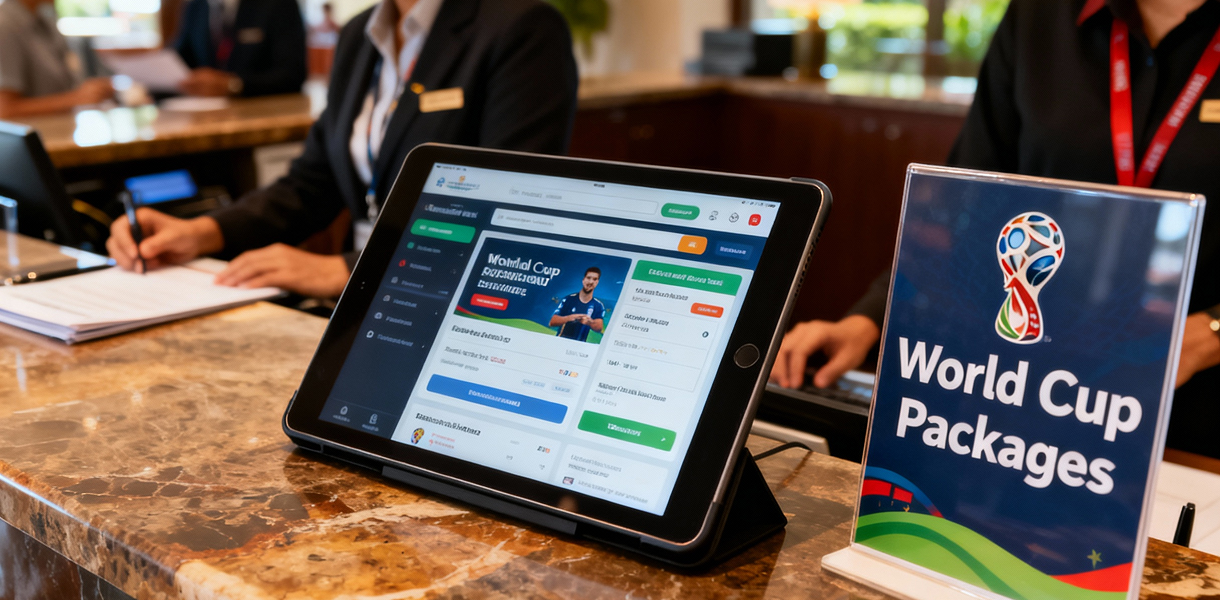
Six months may feel like a long runway, but for an event as volatile as the World Cup, it’s barely enough time to build the structure your hotel will need when demand starts moving. The hotels that outperform won’t be the ones reacting to surges - they’ll be the ones already set up to capture them. What this really means is preparing your systems, your strategy, and your team long before fans start buying tickets or matches begin.
The first step is tightening your rate strategy architecture. Build your price ladders, define your occupancy thresholds, set your minimum-stay rules, and lock in the cancellation policies you’ll enforce during the tournament. Don’t wait for pickup to start - by then the structure should already be in place. A clean strategy now prevents hesitation when it matters most.
Next, pressure-test your forecasting model. The numbers you rely on today won’t behave the same way during a mega-event. Break your forecast into multiple scenarios - optimistic, conservative, and event-driven. Look at what happens if demand spikes 30% faster than expected, or if a major team is assigned to your city. The more scenarios you plan for, the less surprised you’ll be when the real patterns emerge.
This is also the time to align your distribution channels. Rate parity issues during the World Cup will spread quickly and cost you more than almost anywhere else. Audit every partner - OTAs, wholesalers, brand systems - and clean up any inconsistencies. Make sure your direct booking experience is fast, mobile-friendly, and capable of handling increased volume. When compression hits, guests won’t tolerate friction.
Your inventory strategy needs attention too. Start mapping what portion of rooms you want in early release, mid release, and final-stage release. Revisit any tentative group blocks or tour operator holds - if they aren’t solid, renegotiate or release them now. The worst thing a hotel can do is sit on inventory it doesn’t actually control.
Team alignment is just as important. Revenue managers, GMs, DOSMs, and front-office leaders should walk through the World Cup strategy together. Create a shared understanding of your price ladders, your signal triggers, your restrictions, and your escalation steps. When match cities shift or sudden compression forms, your team shouldn’t be debating the plan - they should already know it.
You’ll also want to prepare your marketing and communication angles. Event-driven packages, early-bird non-refundable offerings, long-stay bundles, and premium-room positioning should be built and ready to deploy. Fans traveling internationally book differently - they value certainty more than flexibility, and they respond quickly to clear, time-bound offers.
And finally, equip your hotel with real-time decision systems. Demand during a mega-event doesn’t move in slow, predictable lines. It jumps. Often overnight. Relying on static dashboards or once-a-day pacing reports will put you behind. This is where tools like RevEVOLVE’s Smart Signals, PaceIQ, and RM Copilot shift from “nice to have” to “non-negotiable.” When surges happen, your hotel needs to know immediately - and act immediately.
Six months out is not about fine-tuning rates or updating websites. It’s about building the scaffolding that will hold your revenue strategy together when the real pressure begins. Hotels that do this now will walk into the tournament confident and ready. Hotels that wait will be playing catch-up from the first kickoff.
13. Conclusion: Why Speed Will Decide Revenue Winners in 2026
If there’s one lesson the World Cup 2026 forces the hotel industry to confront, it’s this: demand won’t wait for weekly meetings, traditional reports, or slow internal approvals. The hotels that win next year will be the ones that move faster, see earlier, and decide with conviction long before the market reaches a boiling point. Everything about this tournament - the pace of bookings, the unpredictability of match outcomes, the multi-city demand flow - rewards agility and punishes hesitation.
The reality is simple. Mega-events don’t care how many dashboards you have or how many forecasting spreadsheets your revenue team builds. They respond to momentum, not process. And the only way to match that momentum is by equipping your hotel with real-time intelligence, cleaner strategy structures, and technology that turns signals into action instantly.
This is where modern revenue management is heading. Not toward more reports, but toward more clarity. Not toward heavier workloads, but toward smarter, automated insight. And not toward reactive pricing, but toward proactive, disciplined decision-making that anticipates the market instead of chasing it.
RevEVOLVE steps into this moment as more than a BI tool. It becomes the operating system for hotels navigating high-stakes demand - a system that reads pickup shifts as they happen, flags anomalies before they become missed opportunities, explains strategy in plain language, and keeps teams aligned even when the market changes by the hour. In a tournament built on unpredictability, the greatest advantage your hotel can have is a platform that gives you certainty where others see chaos.
The World Cup is a once-in-a-generation opportunity. Some hotels will ride the wave. A few will capitalize on it completely. The difference won’t be luck - it will be speed. The hotels that prepare now, build the right structures, and use technology that keeps them ahead of the momentum curve will walk out of 2026 with record-breaking performance.
The moment begins long before kickoff. And the revenue leaders who understand that will define the future of hotel strategy - not just for the World Cup, but for every major demand event that follows.